Energy-Efficient Pool Systems for Gulf Harbour Backyards
October 16, 2025
October 16, 2025
Is your pool pump drowning out the evening breeze on the lanai? In a close-knit community like Gulf Harbour Yacht & Country Club, extra noise and wasted energy can take the shine off outdoor living. The good news: today’s equipment and a few smart placement choices can make your pool system quieter and cheaper to run. In this guide, you’ll learn what to buy, where to put it, what to expect with permits and HOA, and how to cut noise without sacrificing performance. Let’s dive in.
Pool equipment often sits close to lanais and patios, so pump noise can carry into your home and a neighbor’s yard. Our Florida climate also means pumps run most of the year, which raises both energy costs and noise exposure.
Before you change equipment or move a pad, check your association rules and contacts through the Gulf Harbour homeowners’ resource hub. The community is also within the Fort Myers and Lee County regulatory framework, so confirm whether your property follows City or County standards in the Lee County Land Development Code.
Recent federal standards raised the bar on pool pump efficiency. As a result, many replacement pumps are now multi-speed or variable-speed models, which are typically quieter and more efficient than older single-speed units, according to the Department of Energy.
Variable-speed pumps use advanced motors and controls to run at lower RPM for daily filtration. That slower speed cuts both energy use and noise. Look for ENERGY STAR certified models and compare the published Weighted Energy Factor to see efficiency.
Florida homeowner guidance shows these pumps can save hundreds per year on electricity for a typical pool, depending on your schedule and rates. Most owners notice the difference right away because the low-speed “hum” is much less intrusive than an older single-speed pump.
A quiet system starts with proper sizing. An oversized pump forces higher RPM and can create turbulence and cavitation that add noise. Work with your installer to match pump size to your pool’s plumbing and filter so you can run the lowest speed that still meets turnover and any minimum flow needs.
Automation helps too. Program mostly low-speed filtration with short higher-speed windows for cleaning or features.
If you use a pressure-side cleaner or spa booster, ask about modern replacements that meet DOE requirements. Your installer should also confirm that salt cells, heaters, and features get the minimum flow they need.
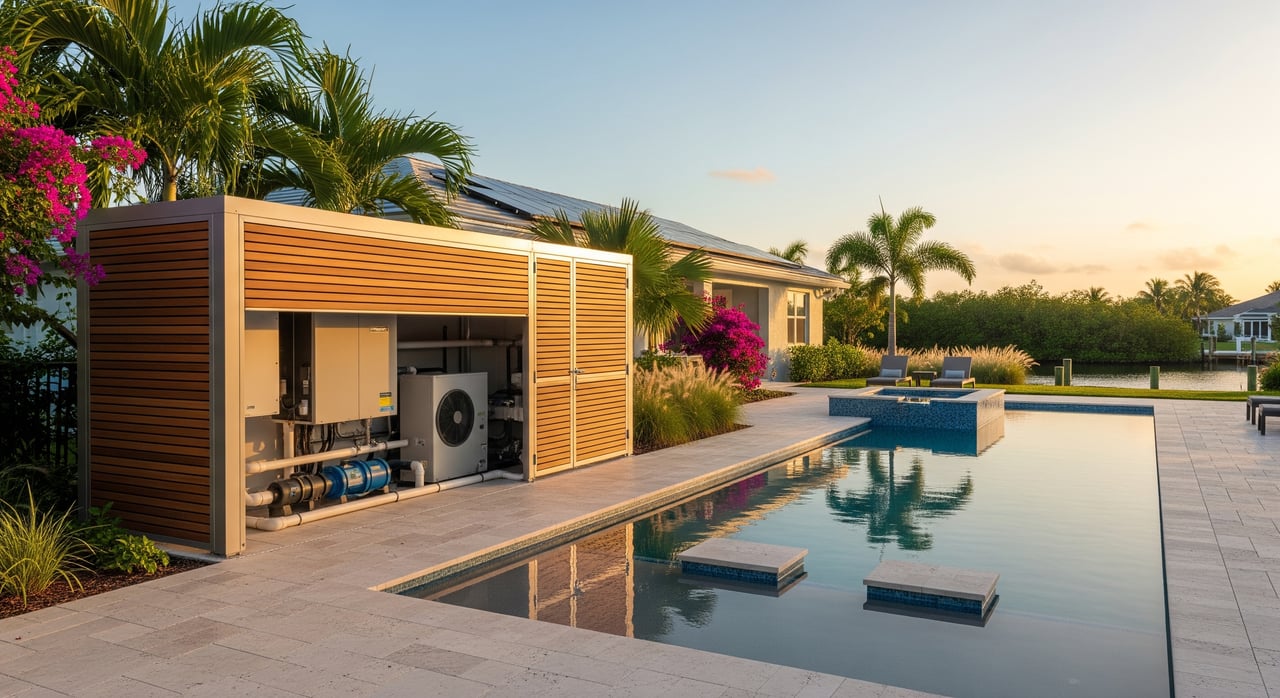
If possible, place the equipment pad away from seating areas and bedroom walls, and out of direct line of sight to the lanai. Even a small move and some dense landscaping can cut what you hear. Avoid mounting the pump against foundation walls or under tight overhangs, which can make sound seem louder indoors.
Simple add-ons make a big difference. Anti-vibration pads and flexible pipe connectors reduce structure-borne noise that travels through concrete and PVC. Keeping pipe runs short and appropriately sized also helps minimize water turbulence and flow noise.
If you still hear the pump across the patio, consider a ventilated acoustic enclosure or blanket. Purpose-built sound boxes with baffled airflow can deliver a substantial reduction when sized and installed correctly. Be sure the enclosure allows access for service and adequate cooling airflow.
New or unusual sounds often signal a fixable issue like worn bearings, partial clogs, or a loose fastener. A routine tune-up can restore quiet operation and protect efficiency.
Electrical work tied to pump replacement often requires an electrical permit, and adding or changing a concrete pad or permanent enclosure can trigger building permits. Verify requirements with Lee County or the City of Fort Myers and follow inspection practices in the Land Development Code.
Lee County has discussed updates to its noise ordinance, and many jurisdictions use decibel limits or “unreasonable noise” standards. If your pump is plainly audible inside a neighbor’s home, it can lead to a complaint. When in doubt, ask code enforcement what limits apply.
Utility rebates for variable-speed pumps vary by provider and change over time. We did not find a current Florida Power & Light residential pool pump rebate listing. Check your utility’s current programs or call the contacts listed on the Gulf Harbour resource hub before you buy.
A quality variable-speed pump typically retails around the mid-hundreds to low thousands, plus labor to install. Energy guidance for Florida homeowners suggests average electricity savings on the order of about 300 to 500 dollars per year when moving from a single-speed to a variable-speed pump, depending on rates, pool size, and schedules. Many owners see a simple payback in roughly one to four years.
For noise, properly installed variable-speed pumps at low filtration speeds are often perceived as a background hum. Placement, mounts, and enclosures all play a role in what you actually hear at the lanai or inside your home.
Ready to make your backyard quieter and more enjoyable, especially if you are prepping for market? For guidance on which upgrades add value and how to position your Gulf Harbour home, reach out to Rich Morea for local, lifestyle-focused advice.
Stay up to date on the latest real estate trends.
Get assistance in determining current property value, crafting a competitive offer, writing and negotiating a contract, and much more. Contact Rich today to discuss all your real estate needs!